

17 Incredible Things To Do In Luxor (A Local’s Guide)
Luxor is packed with mind-blowing Ancient Egyptian monuments from grandiose temples to underground tombs.
But Luxor can also be really overwhelming. There’s so much to see that visitors often complain of getting “templed out” and all the monuments they pack into their itinerary start to blur together.
I’m a travel planner living for over a decade in Egypt and Luxor is one of my favorite destinations. I love exploring the well-known temples in day-long tours and discovering hidden gems. It’s a place I nerd out deeper with every single visit.

So what’s my advice for first-time visitors? Well there’s a lot I wish I knew when I first visited Luxor.
So here’s my ultimate guide to the best of Luxor – from iconic sites like Karnak and the Valley of the Kings to gems off the beaten path.
Use this guide to plan your perfect itinerary and prioritize what you’d love to see – and what you can easily skip.
Here are the most incredible things to do in Luxor:
1. Karnak Temple

This massive temple complex is Ancient Egypt’s ultimate masterpiece built by 30 different pharaohs over 1,500 years.
It’s #1 for a reason because it’s definitely the most impressive temple in all of Egypt.
Each legendary pharaoh added their own additions over the centuries to outshine their predecessor and pay homage to Amun, the king of the gods.
Karnak is the world’s second-largest temple (after Angkor Wat). It has a glorious hypostyle hall that’s like walking through a forest of tall columns adorned with still-vibrant hieroglyphs.

Insider’s tip: avoid temple meltdown and stop for a cold hibiscus tea at the cafes alongside the sacred lake. Explore the complex in chunks and devote at least 3 to 4 hours for your visit.
Don’t miss the famous obelisk by the female pharaoh Hatshepsut and an epic avenue of sphinx statues that leads straight to nearby Luxor Temple.
If you’re visiting in summer, get there early to beat the heat. Karnak opens at 6 am and the cool air is worth the early wake-up call. In the evenings there’s a Sound & Light show that’s a bit dated but still enjoyable for the ambiance.
Read more: 6 Must-See Temples In Luxor (A Local’s Guide)

Ready to explore Egypt?
Book my tours for hassle-free authentic experiences.
Create your perfect Egyptian getaway with my local knowledge and my trusted team of expert guides.
2. Valley of the Kings

Luxor’s Valley of the Kings is a giant graveyard of pharaohs dotted with amazing underground tombs to explore. Some are as vibrant as if they were painted yesterday.
The most famous tomb here (but not the most impressive) is Tutankhamun, unearthed by Howard Carter in 1922.
But there are about a dozen other tombs normally open to visitors (out of a total 63).
These tombs are breathtaking to explore. Imagine walking down the steps into a maze of passages and walls covered with vibrant hieroglyphs. Many paintings have hardly faded after thousands of years.

The Valley of the Kings was used as a burial site for 464 years during the New Kingdom.
It was built to conceal the pharaohs for prosperity under the Theban sands. But even with their hidden entrances, nearly all the valley’s tombs were robbed in ancient times.
Insider’s tip: Your Valley of the Kings ticket gives you entrance to three tombs of your choice – the guards punch your ticket each time you enter a different tomb. I recommend visiting Ramses III and IX and Merenptah on the standard entry ticket.
Note that tour guides aren’t allowed inside so they usually tell you about the tombs before you go in.
Several other tombs require additional tickets. Seti I is by far the most stunning tomb in the valley and worth the 45 USD ticket price!
3. Luxor Temple

Luxor Temple breaks the mold of traditional Egyptian temples.
Forget somber tributes to deities. Luxor Temple was the heart of ancient Egyptian royalty, a stage for pharaohs’ coronations and vibrant festivals.
Giant statues and towering gateways dominate the scene all designed to glorify the rulers themselves. Here the spotlight shines brightly on the pharaohs.

Insider’s tip: Luxor Temple stays open until 10 pm so it’s perfect for a pre-sunset visit. Watch the last rays of sun bathe the temple in a golden glow. Then marvel at the statues and columns under nighttime illumination.
Remarkably, Luxor Temple is a place of continuous worship for over 4,000 years. Both Christians then Muslims followed in the footsteps of the pharaohs to worship at the site. And there’s even a medieval mosque built within the temple walls.
4. Hatshepsut Temple

Hatshepsut was the queen who defied expectations and she carved her own breathtaking temple against the cliffs of Thebes.
Located at Deir al-Bahri, the Temple of Hatshepsut is an architectural marvel. And it’s a testament to the female pharaoh and the sun god, Amun.
Imagine colonnades adorned with exquisite carvings, statues of Hatshepsut herself radiating power, and an altar dedicated to the life-giving sun god, Ra.
Reliefs throughout the temple showcase Hatshepsut’s achievements, including a daring expedition to Punt where she procured exotic treasures.

Insider’s tip: Avoid the long walk up the hill. Instead, hop on one of the golf carts that ferry visitors between the entrance and the temple itself.
Some of the temple was vandalized by her vengeful stepson in an attempt to erase Hatshepsut from history. But her temple has persevered.
Its clean lines and symmetrical columns look strikingly modern – and they’re a stark contrast to the rugged cliffs of the West Bank.
5. Temple of Amenhotep III

While the colossal Colossi of Memnon attract throngs of visitors, they were just the gateway to a grander masterpiece that’s now vanished
These two enormous figures once guarded the entrance to the Temple of Amenhotep III, once the largest funerary complex in Thebes. Nile floods and earthquakes ravaged much of the temple. But they’ve still left behind some impressive remnants.
Here you’ll witness Egyptology in action because excavations are often ongoing in this part of Luxor.

Insider’s tip: Visitors are limited to the area surrounding the Colossi. But keep an eye out as you drive past on your way to the Valley of the Kings. You’ll likely spot archaeologists uncovering new treasures!
Hundreds of statues have been unearthed here including fascinating animal figures like jackals and sphinx-crocodiles used in ancient rituals.
6. Hot air balloon

Forget your snooze button for a day because a hot air balloon ride over the Valley of the Kings is so worth the wake-up call.
Imagine this: you’re floating above some of the world’s most legendary temples with epic views of the Theban hills below. And sunrise over the valley is magical as the pinks softly illuminate the fields (it’s an incredible photo op).

The best part? You’ll glide silently over the valley to spot tombs, farm fields and ancient monuments like an explorer of old. It’s an adventure you’ll never forget.
The tours usually start with your hotel pick-up before sunrise. The hot air balloon ride last about 45 minutes just as the sun rises over the city. You’ll be back at your hotel (or cruise boat) in time for breakfast.
7. Valley of the Queens

These magnificent tombs of Ancient Egypt’s powerful queens are sometimes even more colorful and elaborate than their counterparts at the Valley of the Kings.
And they’re absolutely worth visiting. Some people even say the Valley of the Queens (and princesses) is more impressive than the kings – and far less crowded.

The Tomb of Queen Nefertari (above) is the star attraction and it’s absolutely worth the additional hefty ticket price. The colors and vibrancy inside this tomb are truly spectacular. Visitors are allowed inside for about 15 minutes but a tip goes a long way.
Nefertari’s tomb is often considered the masterpiece of all the Ancient Egyptian tombs, though many other tombs in the Valley of the Queens are smaller than the kings.
A standard ticket gives you entry to three different tombs of your choice (just like at the Valley of the Kings).
8. Valley of the Artisans (Deir el Medina)

This lesser-visited gem was home to the people behind all those spectacular tombs: the artisans and craftsmen who built the final resting places of the pharaohs.
Deir el Medina is a well preserved village that housed ancient artisans and workers. It includes homes, bakeries, workshops and small temples that offer a fascinating glimpse into the everyday lives of these forgotten craftsmen.

Deir el Medina also has some beautiful tombs that (unlike the pharaoh’s) depict everyday life, family and celebrations. Tombs like Sennedjem and Pashedu are just as colorful and well-preserved as the kings and queens.
Deir el Medina has given Egyptologists some of the best accounts of community life in the ancient world – and the social interactions and living conditions that made up this artistic village.
It’s also far less crowded than the Valley of the Kings. And it’s a refreshing look at life in everyday Ancient Egypt.
9. Luxor Museum

The Luxor Museum has a beautiful (but manageable) collection of Ancient Egyptian treasures that deepens your explorations of Luxor’s grand monuments.
It’s a well-labelled and spacious museum lined with statues, two royal mummies, jewelry, pottery and everyday objects from the predynastic period to the Islamic era.
And it’s a fascinating insight into the history of Luxor itself.
Many exhibits have informative and readable labels that help you grasp the history of this ancient city. There’s also a great papyrus collection and a reconstruction of Akhenaten’s wall at Karnak.
Insider’s tip: The Luxor Museum is open until 10 pm so it’s a great to visit at night after a day spent sightseeing in the sun. It’s air conditioned and offers a nice escape on balmy afternoons.
Read more: 15 Must-See Museums In Egypt
10. Felucca on the Nile

Book a sunset sail along the Nile in a traditional wooden felucca boat to experience the lifeline of this ancient city.
A felucca sail is a cool and refreshing break from the sightseeing trail. And it’s a great moment to watch the sun set behind the hills of the West Bank.
Soak in the views and visit Banana Island (an island lined with plantations) to walk the fields and munch on fresh fruit.

It’s a great way to spot water buffalo, camels, children playing in the river and other scenes of everyday life that remain unchanged for generations.
11. Ramesseum

Ramses II was a prolific builder across Ancient Egypt (see Abu Simbel and Karnak) who built the Ramesseum as a mortuary temple to his own glory.
The Ramesseum boasts reliefs that chronicle the pharaoh’s most triumphant moments, from his (embellished) victory over the Hittites at Kadesh to a raid on what was likely Jerusalem.

Insider’s tip: The Ramesseum is a welcome respite from the tourist crowds that’s off the beaten path. If you’re a lover of Ancient Egypt, or just crave some quiet exploration, it’s definitely worth a visit.
But the Ramesseum is also a poignant reminder of the impermanence of empires. The temple once held a colossal statue of Ramses called the Ozymandias, which now lays in ruins.
And this fallen giant was the inspiration for Percy Bysshe Shelley’s famously despairing poem Ozymandias.
12. Temple of Ramses III at Medinet Habu

This mortuary temple of Ramses III stands as a giant tribute to the New Kingdom pharaoh’s greatest victories.
The Temple of Ramses III boasts a quieter atmosphere with far fewer crowds than Karnak. Yet its well-preserved with colorful reliefs, majestic columns and some fascinating history.

The temple is best known for some fascinating reliefs that depict the epic Battle of the Delta.
Ramses III is shown defeating mysterious invaders known as the “Sea Peoples.” Historians speculate these warriors may have originated from modern-day Turkey or Greece.
13. Mummification Museum

This small museum on the Luxor corniche chronicles the Ancient Egyptian art of mummification in a series of well-presented exhibits.
It’s a small museum that never gets too crowded. But it’s a fascinating look at the eerie practice of embalming the dead – a complicated process that took the Ancient Egyptians 70 days.

On display are painted coffins, a mummy of Masaharta, a high priest of the 21st dynasty, and a series of mummified animals including cats and crocodiles. There’s even a spatula used to scrape the brain out of the corpse’s skull.
Other exhibits display canopic jars used to store the deceased’s organs, tools used during mummification, amulets to bless the body and a statue of Anubis, the jackal-headed god of embalming.
14. Howard Carter House

This house of the famous British archaeologist is now a small but fascinating museum.
It offers insights into the everyday life of Howard Carter – the man who famously discovered the tomb of Tutankhamun in 1922.
The mud-bricked home designed by Carter himself is surrounded by greenery and packed with old maps, books, Carter’s own writings, his typewriter and period furniture.
The Egyptologist’s bedrooms, work spaces and photography darkroom are all on exhibit.

Pieces like Carter’s old record player and original excavation tools (used in his archaeological digs) give you a fascinating insight into an Egyptologist’s life.
There’s also a replica of the original tomb of Tutankhamun next door which gives you an idea of the world of wonder that Carter stumbled into with his lantern.
15. Alabaster workshop


I avoided Luxor’s alabaster workshops for years because I thought they were too touristy. But then I finally went and it was actually a fascinating experience.
Luxor has dozens of alabaster workshops along the road to the Valley of the Kings. Many of them have workers who carve the alabaster right in front of you with tools similar to those of Ancient Egypt.

The artisans sculpt figures of ancient gods and goddesses, colorful Nile birds, elaborate vases and bowls (from different types of alabaster). Styles range from bold and colorful to minimal and modern.
Head inside the shop and you’ll find pieces to suite every taste. It’s an incredible experience to watch a piece of alabaster transformed into countless creations.
Read more: 29 Amazing Souvenirs To Buy In Egypt (A Local’s Guide!)
16. New Gourna Village

This unique village is a must-see for lovers of sustainable and organic architecture.
New Gourna was built by Hassan Fathy, a pioneering Egyptian architect who worked with local materials to create a maze of domed homes and courtyards.
New Gourna was built to house a community that lived alongside some nearby ancient pharaonic tombs. The community was relocated to help preserve those tombs for tourism.

But today the village is a landmark in its own right that illustrates Fathy’s use of local know-how and regional influences (including Coptic and Nubian architecture).
New Gourna is known for its modest mud brick construction and simple and cost-efficient style. It was built as Egypt emerged from British occupation and forged its own national identity.
17. Winter Palace

This 19th century Colonial-style hotel boasts sprawling gardens overlooking the Nile and old-world charm – all minutes from the Luxor Temple.
Built in 1886, Sofitel Winter Palace mixes French regency elegance with Egyptology lore.

The Winter Palace is just steps away from the Luxor Temple. And it’s a regal and majestic spot for a home base in Luxor. If you’re not staying here, then stop by for a leisurely lunch at one of its restaurants.
Read more: 12 Best Boutique Hotels In Egypt
Must-see temples in Luxor
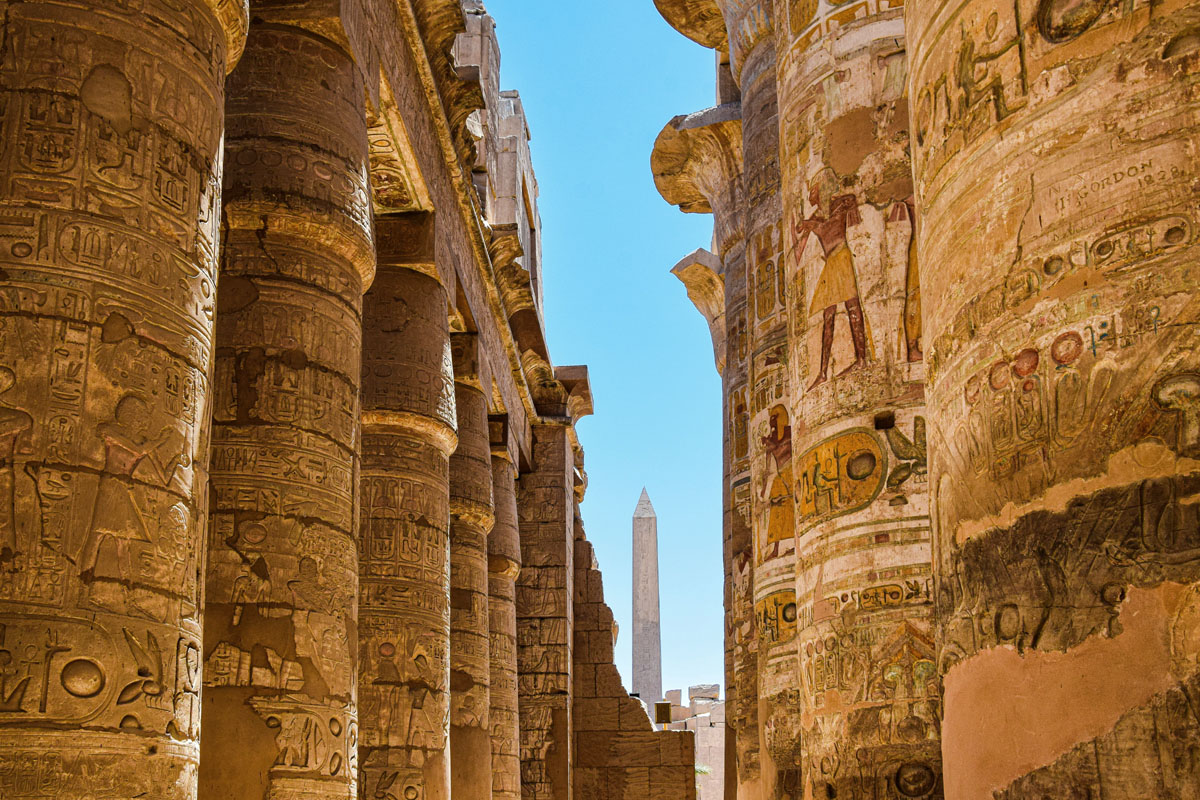
Luxor is home to the most incredible temples of Ancient Egypt – from monuments to the supreme sun god to mortuary temples of history’s greatest pharaohs.
It’s a bucket list destination for lovers of Ancient Egypt – and anyone who spent their childhood watching Indiana Jones.
So where do you begin with Luxor’s numerous temples? Read 6 Must-See Temples In Luxor (A Local’s Guide) for my ultimate guide.
An ultimate Nile cruise guide

A Nile cruise boat is the best (and easiest) way to see legendary Luxor, Aswan and all the magnificent Ancient Egyptian temples in between.
No itinerary to Egypt is complete without stops at these major sites.
Read An Ultimate Nile Cruise Guide (And 8 Essential Tips!) for everything you need to know.
BOOK YOUR TRIP:

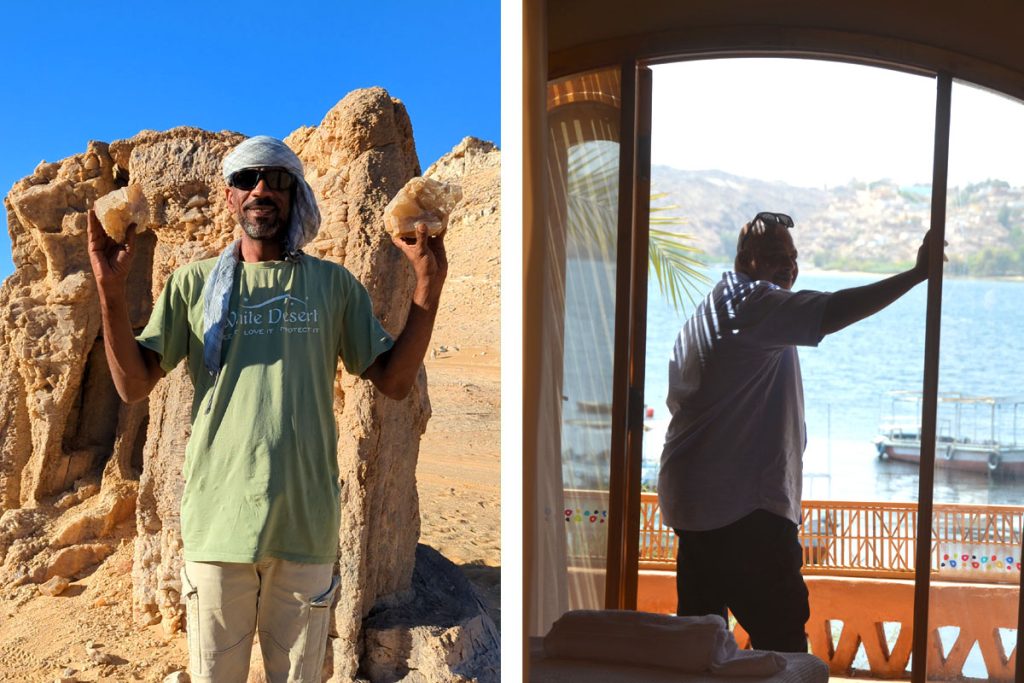
Coming to Egypt? I organize unforgettable trips across Egypt that offer you comfortable, hassle-free and authentic experiences. I’ve been living in Egypt for over a decade and I design these tours with all my local knowledge.
I help you create your perfect custom itinerary. And I connect you with the best expert guides – that I know and trust.
Fill out the form below for more details.
