

30 Must-See Treasures At The Grand Egyptian Museum
The much-anticipated Grand Egyptian Museum is finally completely open to visitors – including all the main galleries, the s0lar boat exhibit and the entire breathtaking King Tut collection.
After numerous years-long delays, the Grand Egyptian Museum fully opened on November 4th, 2025 as thousands of visitors rushed to see the complete treasures of King Tutankhamun and his splendid gold death mask.
The museum does sell out, so book your ticket online before you go! (UPDATE: if you’re going on a Friday or Saturday, then you MUST buy your ticket online).
Besides the stunning King Tut collection, the GEM also has 12 main galleries that chronicle the history of Ancient Egypt from the predynastic fragments to the golden glories of the New Kingdom.
These galleries are MASSIVE and take at least a couple of hours to visit.
And there’s also the Grand Staircase lined with statues, busts and treasures of ancient kings.
Ultimately, the GEM houses more than 100.000 different artifacts.
So where do you begin with this vast collection?
And what are the masterpieces that you shouldn’t miss?

I’m a travel planner living for over a decade in Egypt – and I’ve been following this museum since it was under construction.
And this is my ultimate local’s guide to the must-see masterpieces inside the Grand Egyptian Museum (GEM).
Use this guide as a checklist for your visit and to get familiar with the GEM before you go.


Here are the must-see masterpieces at the Grand Egyptian Museum you shouldn’t miss:
1. The Hanging Obelisk of Ramses II (front entrance)

This grand hanging obelisk near the museum’s entrance once lay in two pieces at Tanis and has now been restored to its former glory.
It also holds a secret that hasn’t been seen in more than 3,000 years.
The obelisk was discovered at Tanis in the Nile Delta, North Egypt, where it lay on its side in two fractured pieces.
It has been rejoined and erected on a four-legged pedestal that’s adorned with the word “Egypt” in all the world’s languages. The pedestal is also engineered to protect the obelisk from traffic vibrations.
The secret of the obelisk


This is the world’s first hanging obelisk, which means you can view it from all sides and at the base.
When this display is finished, you’ll be able to walk underneath the obelisk to see the cartouche of Ramses II, which is inscribed on the bottom and was hidden from sight for more than 3,500 years.
This cartouche was originally meant to be hidden between the bottom of the obelisk and the granite base. Egyptologists believe the cartouche was meant to preserve the origin of the obelisk and protect it from manipulation.
Future rulers could have replaced Ramses II’s cartouches with their own (as rulers often did in Ancient Egypt). But they couldn’t have changed the cartouche hidden at the base!

Ready to explore Egypt?
Book my tours for hassle-free authentic experiences.
Create your perfect Egyptian getaway with my local knowledge and my trusted team of expert guides.
2. Ramses II colossus (Grand Hall)

(Dynasty 19, Red Granite, from the Great Temple of Ptah at Memphis)
This colossal 11-metre statue of Ramses II greets you right as you enter the museum inside the Grand Hall.
And it has a fascinating story behind it.
The 3,200-year-old statue was discovered in 1882 in Memphis – and it was found broken in six different pieces.
Attempts to restore the statue all failed. Until 1955, when Egyptian leader Gamal Abdel Nasser moved the Ramses colossus to one of Cairo’s busiest squares, just outside the city’s main railway station.

The statue was restored to its full height thanks to iron bars inside the main body. And the grandiose figure was meant as a symbol of might that connected Ancient Egypt’s famous builder to its modern-day nationalist president.
The statue was transferred to the Grand Egyptian Museum in 2006, wrapped in rubber foam on two flat-back trucks that made the perilous journey in 10 hours. And it was so enormous that it had to be installed inside the museum while the building was still under construction.

Ramses II now stands in the Grand Hall where he’s safe from further erosion and the vibrations of city traffic at the train station.
Known as one of Ancient Egypt’s greatest builders and military leaders, Ramses II left his mark at numerous temples across Egypt. You’ll find him most famously at the twin temples of Abu Simbel and at the entrance of Luxor Temple.
3. The Victory Column of King Merenptah (Grand Hall)

(Dynasty 19, granite, from Heliopolis, Cairo)
King Merenptah, the son of Ramses II, did his father proud with his victories against Egypt’s foreign invaders that are recorded on this beautiful column.
Merenptah battled against Libyan tribes and the so-called Sea Peoples during his rule in the 19th Dynasty of the New Kingdom (though Egypt fell to foreign invaders centuries later and wouldn’t see a true Egyptian leader until Nasser in the 1950s).
This 5.6-meter victory column includes the goddess Anath’s command to the king to “take your mace so you may kill the rebels.”

The column also includes accounts of the king’s military prowess over the mysterious Sea Peoples, who likely originated in modern-day Italy, Cyprus or Turkey. The top has Horus protection symbols and images of Merenptah holding captives by their hair.
The column was kept for 10 years at the Cairo Citadel for restoration and was transferred to the GEM in 2018.
Merenptah was in his 70s when he took the throne from his father Ramses II (who ruled well into his 90s).
4. Seated statue of King Thutmose III (Grand Staircase)

(Dynasty 18, granite, from Karnak Temple, Luxor)
King Thutmose III ruled for over two decades alongside Hatshepsut, his stepmother and aunt.
He’s shown here sitting with his bare feet on top of nine bows that symbolize the enemies of Egypt. He wears a royal headcloth topped with the uraeus – a cobra perched on his forehead that symbolizes divine power.
His expression is tranquil and determined with precisely carved eyes, prominent cheekbones and a sharp jawline.

Thutmose III ruled over Egypt’s largest-ever empire thanks to his numerous campaigns into Syria, Palestine and Nubia. He secured more territory than any other Egyptian king and earned the nickname the “Napoleon of Egypt.”
But he’s also notorious for destroying references to Hatshepsut and her mighty rule, seeking to erase the ancient queen from history.
Though more recent studies say the destruction occurred much later (Hatshepsut did trust Thutmose III to command her army, after all, so the rivalry might have been exaggerated).
5. Colossal Statue of Queen Hatshepsut (Grand Staircase)

(Dynasty 18, red granite, from the Mortuary Cult Temple of Hatshepsut, Luxor)
This beautiful statue of Ancient Egypt’s iconic female queen shows Hatshepsut worshiping the gods with her hands flat on her kilt.
It’s a rare statue that has survived from her mortuary cult temple in modern-day Luxor.
Hatshepsut’s earlier statues were more feminine. But this one depicts her with a broad face and a slight smile in the style of more male and king-like statues from later in her reign.

Hatshepsut rose to power after the premature death of her husband Thutmose II.
The king’s heir was still a baby, so Hatshepsut ruled as regent on behalf of the child. She later claimed kingship for herself and then ruled alongside Thutmose III until her death.
The statue shows Hatshepsut in the regalia that was traditionally reserved for male kings, including the nemes headdress and false beard.
6. Statue head of King Akhenaten (Grand Staircase)

(Dynasty 18, sandstone, from the Aten colonnade at Karnak, Luxor)
If this head of King Akhenaten looks different than the standard well-balanced portraits of ancient kings – that’s because it is.
Akhenaten is shown with almond-shaped eyes and an elongated face in the new revolutionary artistic style of his period. It was a huge departure from the proportioned and idealized portraits of most Ancient Egyptian kings of the past.
And it’s meant to show Akhenaten in a more realistic and life-like way, along with all the quirks and unique characteristics of his face.

Akhenaten’s rule brought in a whole new style of art – and a whole new perspective on religion that some consider the world’s first monotheism. Akhenaten abandoned the traditional ancient gods and introduced a new brand of worship centered around a single sun god Aten.
This head of Akhenaten is one of several colossal statues that once graced the temple of Aten at Karnak in Luxor. It portrays Akhenaten with the royal headcloth and a bundle of ostrich feathers that shows his link to the air god Shu.
But Akhenaten’s revolutionary changes were overturned after his death, notably under the rule of his son and successor Tutankhamun. Akhenaten’s monuments were dismantled and he was excluded from chronological lists of kings.
7. Sphinx of Amenemhat III (Grand Staircase)

(Dynasty 12, granite, from the Great Temple of Amun at Tanis)
This stunning statue shows King Amenemhat III as a sphinx – and depicts him as a king with the strength and ferocity of a lion.
The statue is one of seven different sphinxes of Amenemhat III that were found at Tanis on the Nile Delta, where the Nile branches off and makes the lands lush before it flows into the sea.
It depicts the king with his characteristic fleshy cheeks and pouting lips. But it also emphasizes his superhuman power and his determined face.


The statue rest on a base decorated with cartouches of different kings who all attempted to usurp these Tanis sphinxes and claim them as their own.
At one point, the sphinxes found in Tanis were mistakenly called the “Hyksos sphinxes” because they contained the names of Hyksos rulers.
Amenemhat III was a Middle Kingdom ruler who’s best known for building a labyrinth at the foot of a pyramid, admired as one of the lost wonders of the world (now destroyed). He also built the Black Pyramid at Dahshur with its complex security system.
8. Obelisk tip of Queen Hatshepsut (Grand Staircase)

(Dynasty 18, red granite, from the Great Temple of Amun at Karnak, Luxor)
The obelisk tip of Queen Hatshepsut was originally erected at Karnak, but King Thutmose III later removed all the queen’s royal names and images from the piece.
The spaces where Hatshepsut was once portrayed were filled in with flowers. The god Amun’s hands were originally touching Hatshepsut. But the statue was altered to show Amun holding a sceptre and an ankh instead.

Hatshepsut had originally erected two obelisks at the Karnak Temple in Luxor. One still stands today and it’s the tallest obelisk in Egypt towering at 29.5 meters.
The second obelisk topple in antiquity (possibly during an earthquake) and left only the base and the upper part laying by the sacred lake.
9. Amenhotep III and Re-Horakhty (Grand Staircase)

(Dynasty 18, red granite, from the Mortuary Cult Temple of Amenhotep III, Luxor)
This striking statue depicts King Amenhotep II sitting with the falcon-headed sun god Re-Horakhty.
It was discovered very recently in 2010 at Amenhotep III’s Mortuary Cult Temple in Luxor – an enormous temple that lays just beyond the famous Colossi of Memnon.
And while thousands visit the Colossi of Memnon everyday, few know that the enormous statues are actually the entrance to Amenhotep III’s temple.

Only parts of the temple remain today but this was once the largest funerary complex in all of Thebes. It was built to honor Amenhotep III but centuries of Nile flooding left the temple in fragments.
The temple is now the site of archaeological digs – whenever I’m in Luxor, I always see them digging there!
And this masterful statue of the king and Re-Horakhty is just one of many discovered there.
The statue is carved from a piece of multicolored granite that shines red and black in turns. The unpolished areas along the king’s eyebrows and the stripes on his royal headcloth were originally painted in bright colors.
10. Ptah, Ramses II and Sekhmet (Grand Staircase)

(Dynasty 19, granite, from the Temple of Heryshef)
This royal trinity features King Ramses II flanked by two powerful gods: the creator god Ptah and the lion-headed war goddess Sekhmet.
Ptah and Sekhmet had a son named Nefertum, but in this statue Ramses II is putting himself in the place of a child god.
Ramses II’s crown is even slightly higher than the headdresses of the two gods – and that symbolizes his majesty and power were beyond god-like.

Ptah is one of the oldest gods of Ancient Egypt and was first mentioned in the first dynasty. He’s associated with craftsmen and creation itself (there’s an entire beautiful temple dedicated to Ptah at Karnak).
Sekhmet was both revered and feared by the Ancient Egyptians as a powerful force of destruction and war. She was also a goddess who guided the king into the afterlife. She was harnessed in wartime to breathe fire upon enemies. But her fury also had to be pacified in times of peace with gifts of beer and wine.
This sacred triangle represents the creator Ptah, the ruler Ramses and his guide in the afterlife Sekhmet. Together they symbolize the “before, the present and the after” or birth, life and death.
11. Sarcophagus of King Thutmose I (Grand Staircase)


(Dynasty 18, quartzite, from tomb KV 38, Valley of the Kings, Luxor)
Thutmose I was the first king to be buried in the Valley of the Kings in Luxor inside this splendid sarcophagus adorned with protection symbols and gods of the afterlife.
Although this sarcophagus was discovered at an entirely different location than it was first buried.
Thutmose I was originally buried with his daughter Hatshepsut in tomb KV20 in the Valley of the Kings. But his was actually found in tomb KV 38.
He was likely moved to KV38 by his grandson Thutmose III, perhaps out of the grandson’s resentment towards his stepmother Hatshepsut.
12. Mask of Tutankhamun (Tutankhamun gallery)

The gold mask of the 18th-century Pharaoh Tutankhamun is the most famous piece at the Grand Egyptian Museum.
And it’s the best-known object from Ancient Egypt itself – it’s often a symbol of the ancient civilization that symbolizes mystery and might.
The Mask of Tutankhamun is housed in a darkened room amid the vast collection of treasures discovered in the tomb of the young king.
- The mask is 54 centimeters (1.8 ft) tall and weighs over 10 kilograms (22 pounds).
- It was discovered by Howard Carter in 1925 in the Valley of the Kings in Luxor.
- When Carter first looked into the tomb, a patron behind him asked if he could see anything. Carter was speechless and finally exclaimed, “Yes, wonderful things!”
- The shoulders of the mask contain an inscription in hieroglyphs of an ancient protective spell from the Book of the Dead.
- The mask is decorated with semi-precious stones and inlaid with colored glass and gemstones.
- It is made with two layers of high-karat gold.
- The mask portrays Tutankhamen wearing a headcloth topped by the royal insignia of a cobra and vulture (symbolizing Upper and Lower Egypt).
- Popular culture has spread the myth of the curse of King Tut’s tomb – where those who dare to disturb a Pharaoh’s tomb are condemned to die. Eight people present when the tomb was opened died within twelve years.
13. Treasures from Tutankhamen’s tomb (Tutankhamun gallery)

Besides the iconic death mask, the King Tut exhibit also houses thousands of treasures found inside Tutankhamun’s tomb.
The complete collection of 5,398 artifacts from the tomb of King Tut is displayed at the GEM in its entirety for the first time since it was excavated by Howard Carter in 1922.
The spectacular collection includes the inner coffin of Tutankhamun along with jewelry and other fascinating objects meant to accompany the boy king into the afterlife. The artifacts include sarcophagi, chariots, precious jewelry, statues and furniture.
King Tutankhamun’s chariots were all moved to the GEM in 2018. And numerous other artifacts were brought in from storage and museum in Upper Egypt, Luxor, Fayoum and Alexandria.
14. Priest Sneferuinishetef’s tomb (gallery 1)

(Dynasty 6, mudbrick, plaster and pigment. Dahshur)
These beautiful and vivid scenes from the tomb chapel of Priest Sneferuinishetef in Dahshur show everyday life in Ancient Egypt.
Sneferuinishetef was a high-ranking official during the 6th Dynasty. And his painted tomb has immortalized touching scenes like donkeys carrying loads and his daughter playing the harp during dinner.
Officials grew in wealth and power during this period – and they required high-quality tombs made by skilled artists to reflect their high rank.


The tomb includes scenes painted in remarkable detail with tiny animals and objects depicted with striking realism.
Scenes include:
- Netting fish: fishermen gather various species of the Nile in their wide nets. The scene depicts nature’s bounty that the dead hope to enjoy in the afterlife.
- Hunting in the marshes: Sneferuinishetef enjoys a fishing expedition with his family as crocodiles and hippos fight in the waters below.
15. Khafre Statue (gallery 2)


(Dynasty 4, Gneiss, Giza. GEM 9016.)
King Khafre is the builder of the Great Sphinx and one of the pyramids at Giza.
This seated statue shows him in the royal headcloth (nemes), wearing a royal beard and pleated kilt.
Khafre’s throne is adorned with papyrus and lotus flowers, the symbolic flowers of Lower and Upper Egypt.
His expression is serene as he looks off into the distance. Hieroglyphs along the statue call Khafre a “great and perfect god, beautiful falcon, son of Re, master of appearances.
16. Troop Models (gallery 4)


(Dynasty 11, wood, plaster, pigment. Asyut. GEM 9282, 9284.)
Four long rows of marching troops stretch out into the distance in this wooden model.
Egyptian spearmen are depicted carrying large shields alongside Nubian archers carrying bows.
The Nubians were known to be masterful archers and are thought to have aided King Mentuhotep II’s victory against Egypt’s northern rivals.
17. King Sobekhotep V (gallery 5)

(Dynasty 13, Granite, Karnak. GEM 8263)
This seated statue of Sobekhotep V shows the king wearing the traditional garb of the Sed Festival, a celebration held in the pharaoh’s 30th year of kingship that celebrated their continued rule.
Sobekhotep V only ruled for a few years, however, and the statue was made merely in his hopes for a long reign.
18. Queen Khenemetneferhedjet Weret II’s jewelry (gallery 6)

(Dynasty 12, gold, semi-precious stones. Dahshur.)
This bright and beautiful collection displays the royal jewelry of King Senwosret III’s wife.
The highly-skilled jewelry makers used exacting inlay techniques and incorporated clever clasp designs that testify to the high levels of Middle Kingdom craftsmenship.
The jewelry contains high-quality gold and vivid, glistening gemstones.
19. High Priest Ramessesnakht (gallery 7)

(Dynasty 20, granite, Karnak. GEM 5999)
This gorgeous seated statue of Ramessesnakht, a high priest of Amun, once stood at Karnak dedicated by his son (who was also a high priest).
Ramessesnakht is shown writing with his head protected by Thoth, the baboon god of wisdom, writing, magic and the moon.
High priests of Amun in Thebes (modern-day Luxor) were profoundly influential and powerful in Ancient Egyptian society.
They eventually controlled Upper Egypt and even called themselves kings towards the end of the New Kingdom.
20. Polychrome glass vessels (gallery 7)


(Dynasty 18, glass, from Saqqara, Helwan, unknown provenance)
Craftsmen began to import colored glass ingots into Egypt in the early New Kingdom – and they quickly became skilled glass workers.
They worked at factories in palace sites and used sandy cores to form the vessels and then glass rods to create colorful chain and chevron patterns.
21. Kneeling Statue of Queen Hatshepsut (gallery 8)

(Dynasty 18, granite, Deir el-Bahri. GEM 80519.)
This larger-than-life statue is remarkable for its sheer size and scale.
The sculptors of this legendary queen were the first to make kneeling royal statues that were actually larger than all the life-sized kneeling statues made in Ancient Egypt since the Old Kingdom.
Hatshepsut is shown offering nu pots to Amun-Re, the state god.
22. Colossal Amun and Mut Statue (gallery 9)


(Dynasty 18, limestone, Karnak. GEM 6729.)
The Amarna Period and the revolutionary rule of King Akhenaten saw the destruction of many statues of the old gods.
This colossal statue of Amun was one of the hundreds commissioned to replace the sculptures that had been destroyed.
The statue contains the cartouches of King Horemeheb and the names of the two deities: Amun-Re, “lord of the thrones of the two lands,” and Mut, “lady of the sacred lake.”
23. Dendera Treasure Hoards (gallery 10)


This treasure hoard includes precious gold and silver items that were hidden away in Dendera during the Ptolemaic Period, perhaps in a time of political unrest.
They were stowed away by temple priests who wanted to keep their temple’s most precious items safe from possible looters or thieves.
Some of these items were confiscated from thieves. Other priceless objects were found stowed away in a pit.
24. Crocodile mummy (gallery 10)

(Graeco-Roman Period, organic remains, Kom Ombo)
Priests in Kom Ombo bred crocodiles inside their temple and then offered their mummies as sacrifices to the Nile god Sobek.
25. Horus as a falcon (gallery 10)

(Dynasty 26, bronze, gold, pigment, from Sais)
This bronze figure of the falcon god Horus is a brilliant example of the masterful metalwork of the Late Period.
Horus’ feathers and chest ornament are encrusted in finely-detailed gold, down to each individual feather.
Horus was the falcon god of kingship and his double crown (partially intact) symbolizes his authority over Upper and Lower Egypt.
26. Sarcophagus of Nesptah (gallery 11)


(Dynasty 26, diorite, Luxor)
Nesptah was a powerful priest, mayor of Thebes and governor of Upper Egypt – and his family’s great wealth allowed him to order a lavish sarcophagus.
Carvings of Nesptah’s names and titles are wrapped around the sarcophagus.
Nesptah’s father Mentuemhat was the most powerful man in Upper Egypt at the time, and negotiated successfully with a slew of Egypt’s enemies including the Kushites and Assyrians.
27. Young man holding a shrine (gallery 11)

(Ptolemaic Period, limestone, Memphis (Mit Rahina). GEM 2669.)
This touching Ptolemaic statue of a young man, possibly a priest, holds a small shrine that contains the image of the falcon god Horus the Child (Harpocrates).
Harpocrates became an important god of kingship for Ptolemaic rulers.
28. Stela of Djehuty (gallery 12)

(Roman Period, basalt, Fayoum)
This surreal stela depicts the blending of Ancient Egyptian and Roman cultures during the Roman Period.
The stela is typically Ancient Egyptian because it shows Djehuty making offerings to Egyptian gods and goddesses.
But it’s also unusual because this Egyptian scene also features Djehuty’s Roman-style head carved on top.
29. Mirror box of Queen Henuttawy (gallery 12)


(Dynasty 21, wood, ivory, pigment, Deir el-Bahri. GEM 8406.)
This gorgeous wooden mirror box was discovered laying on top of Queen Henuttawy’s coffin.
The elaborate box with colored ivory panels befits the queen’s high rank as the chief wife of King Pinudjem I.
Painted scenes of a nude woman amid marsh wildlife, ducks and flowers suggest beauty in its youthful prime.
30. The Solar Boat exhibit


The enormous reconstructed Khufu ship, which once sat beside the Great Pyramid in Giza, is now finally exhibited at the GEM.
The enormous 42-metre long wooden vessel was built to carry the soul of King Khufu to the afterlife.
And it’s a 4,600-year-old marvel of ancient craftsmanship that is housed in an enormous exhibit where you can walk around the boat and view it from all sides.
GEM tickets & opening hours

You can book your tickets online OR buy them at the museum ticket booth.
I bought mine easily at the museum. But I really recommend buying your tickets online in advance because the King Tut exhibit opening means the museum is more crowded than usual.
Just remember: payment is by credit/debit card only. NO CASH accepted.
Types of tickets

- Basic ticket: You can buy a basic ticket and see the museum on your own (this is what I did). Everything is labelled well so you’ll have plenty of info to ponder. Price: 1,200 EGP for foreigners and 200 for Egyptians.
- Ticket with a 90-minute guided tour: You can buy a ticket with a guided tour included. This lets you join a guided tour with a pro museum tour guide (they’re knowledgeable and passionate guides who are well-trained about the collection). Tours start every hour going from 9 am with the last one at 3 pm, so you never have to wait long. Price: 1,700 EGP for foreigners and 350 EGP for Egyptians.
Children’s tours: Tours are also available for kids ages 6 to 12. These aren’t always offered daily so check the GEM website for availability.
Book your tickets online at the GEM official website.
Select from the options at the bottom – either “admission tickets” or “guided tour tickets.” And it will take you through a page where you can select ticket types and book a time slot for a guided tour.
The guided tours do sell out – so if you want to join a tour, consider booking tickets online to secure your spot!
Opening hours
GEM is open every day (Monday to Sunday) from 8:30 am to 6 pm.
If you want to join a guided tour, note that the last one for the day starts at 4pm.
Restaurants and cafes at the GEM

There’s a nice selection of restaurants and cafes in the Grand Hall (towards the back of the colossal Ramses II statue) where you can stop for a snack, rest your feet or grab a nice meal with a view.
Restaurants and cafes include:
- Zooba: upscale Egyptian street food in a hip setting, from dips and sandwiches to beans, falafel and hearty main dishes.
- Bittersweet: a favorite for pizzas and desserts under their pretty pink flowered tree.
- Laduree: upscale bakery originating in Paris that specializes in French macarons. Great outdoor seating with pyramid views.
- 30 North: Egypt’s homegrown artisanal coffee hub and great cookies.
- Starbucks: no comment.
- Dolato: tasty and refreshing ice cream (try the yogurt blueberry).
- Beano’s: homegrown Egyptian cafe with great drinks, sandwiches and beautiful alabaster lighting.
For vegans/vegetarians: I recommend koshari at Zooba – it’s Egypt’s national dish! Koshari is a hearty main dish that’s a mix of pasta, rice, vermicelli and lentils. It’s topped with chickpeas, tomato sauce, garlic vinegar and crispy fried onions. Zero animal products used.
Shops at the GEM


GEM has a beautiful gift shop with handmade and authentic Egyptian souvenirs. There are also several boutiques with some of Egypt’s finest high-end brands and designers.
Shops include:
- Okhtein: luxury handbags inspired by Arab culture.
- Dima: handcrafted luxury jewelry and 18-karat gold pieces.
- Kahhal Looms: fine handmade carpets made in Egypt since 1936.
- Atef Wassef: Egyptian family business crafting fine silver jewelry for 3 generations.
- Nakhla: family-owned jeweler inspired by Coptic and Ancient Egyptian heritage.
- Azza Fahmy: iconic Egyptian jewelry brand founded by a woman trained by the craftsmen of Khan el Khalili.
- Nuniz: handmade leather bags made by Cairo artisans.
- Premium Mart: snacks, sodas and candy.
- Nefertari: essential oils, soaps and lotions made with Egyptian natural ingredients.
Don’t forget:
- The last time to buy a ticket at the museum’s ticket booth is 4 pm. There are no tickets sold after 4 pm – so get there on time.
- Parking is available by the entrance for 50 EGP.
- No cash accepted at the museum ticket booth – credit and debit cards only.
- No outside food or drink allowed.
- ID is required to buy tickets and rent headphones (for a museum guided tour).
- No DSLR cameras allowed inside. That also means digital and film cameras of any kind are not allowed.
- Mobile photography and video only.
A map of the GEM

GEM is a prime destination for Ancient Egyptian artifacts and in-depth, multi-media exhibits.
Use this map to plan your visit. I recommend going up the staircase then seeing King Tut and the main galleries.
Other Ancient Egypt museums in Cairo
GEM is definitely the top museum in Cairo – and it should be your first stop when you visit the city.
But there are also two other major museums in Cairo that house Ancient Egyptian collections.
And they’re great to explore if you have some time in the city or if you want to take a deep dive into Ancient Egyptian history.
The Egyptian Museum (in Tahrir Square)

The Egyptian Museum in Tahrir Square has NOT closed – and it’s actually still a beautifully rugged place to explore antiquities.
There’s also some pretty exciting temporary exhibits that are often hosted along with artsy events and collaborations.
And while the treasures of King Tut have now been moved to the new GEM museum in Giza, the old Egyptian Museum still holds thousands of artifacts.
And that includes masterpieces and historically important artifacts you won’t see anywhere else.
The National Museum of Egyptian Civilization

The National Museum of Egyptian Civilization near Coptic Cairo is a newer museum that gives you an overview of Egyptian history.
Collections span from pre-history through Ancient Egypt and Islamic to modern times.
And it also houses the mummies collection on the lower level that you can’t see anywhere else.
Best things to do in Cairo
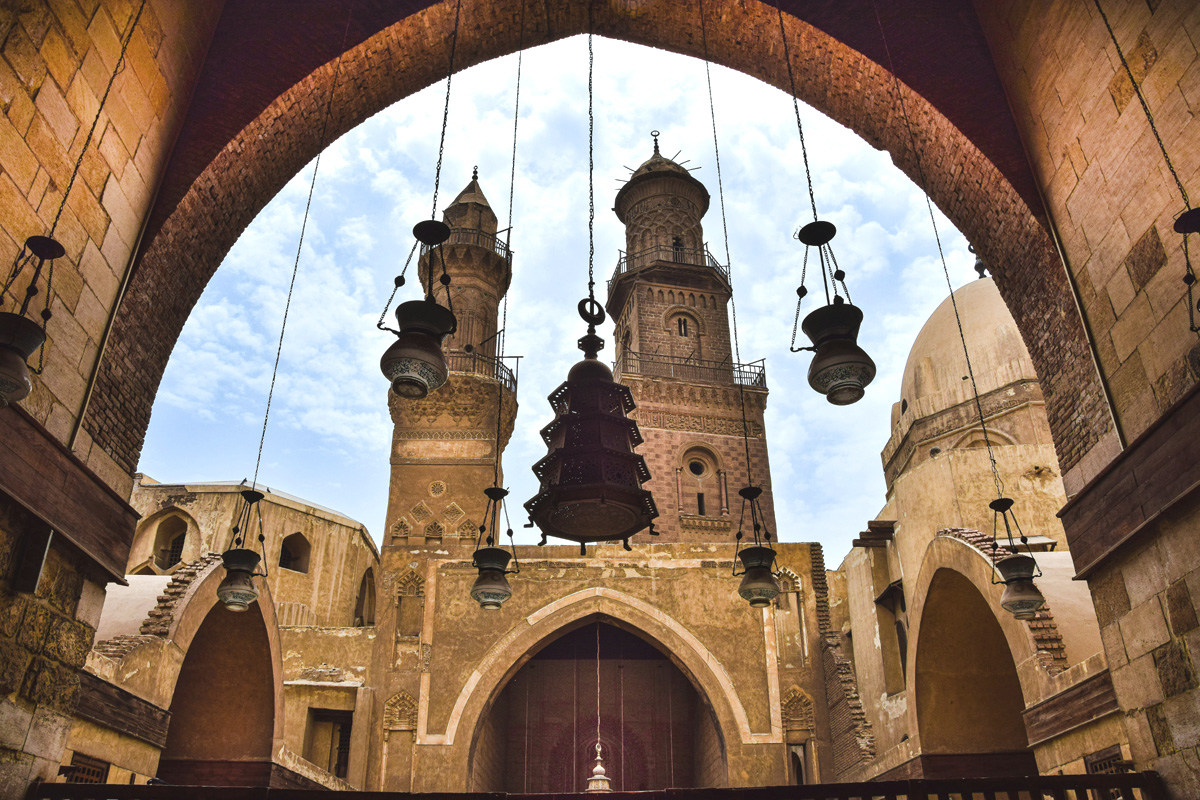
Pyramids, mummies, souqs, museums. There’s a lot to do in Cairo. And planning your perfect itinerary can quickly get overwhelming.
Where do you even start? And what’s worth visiting and what are the overrated attractions to avoid?
Read 25 Best Things To Do In Cairo (A Local’s Guide) for my ultimate guide.
BOOK YOUR TRIP:

Coming to Egypt? I organize unforgettable trips across Egypt that offer you comfortable, hassle-free and authentic experiences. I’ve been living in Egypt for over a decade and I design these tours with all my local knowledge.
I help you create your perfect custom itinerary. And I connect you with the best expert guides – that I know and trust.
Fill out the form below for more details.


We came across your wonderful site via Google. We love Egypt and treasure our experiences there many years ago. The opening of the Grand Egyptian Museum is very exciting. We appreciated your very thorough & concise views and its highlights which your passion for Egypt inspires us to return one day. Thank you